Organic vs. Inorganic Mulch

Choosing the right mulch is a crucial decision for the health and appearance of your landscape. The main choice comes down to two categories: organic and inorganic. Organic mulches, such as wood chips and compost, break down over time, enriching your soil. Inorganic options, such as rock and rubber, offer long-lasting durability and low maintenance.
Organic vs. Inorganic Mulch: Which is Best for Your Yard?
Both types of mulch are effective at suppressing weeds, retaining soil moisture, and regulating temperature. However, they achieve these goals in different ways. This guide explores the key differences between organic and inorganic mulch to help you decide which is the best fit for your landscaping goals.
What is Organic Mulch?
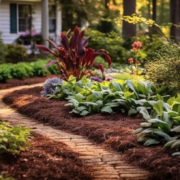
Organic mulch is made from natural, plant-based materials that decompose. As they break down, they release valuable nutrients into the soil, improving its structure and fertility. This decomposition process is one of the primary benefits of organic mulch, creating a healthier environment for your plants to thrive.
Common Types of Organic Mulch:
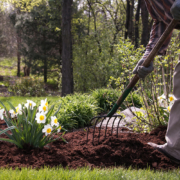
- Shredded Bark & Wood Chips: A popular and attractive choice for flower beds, shrubs, and trees.
- Pine Needles & Straw: Excellent for vegetable gardens as they are lightweight and break down quickly.
- Compost: A nutrient-rich option that dramatically improves soil health, perfect for new plantings.
- Leaves & Grass Clippings: A free and readily available option that adds rich organic matter to the soil.
The main advantage of organic mulch is its ability to actively build healthier soil. The downside is that it needs to be replenished every 1 to 2 years, as it decomposes.
What is Inorganic Mulch?
Inorganic mulch consists of non-plant materials that do not decompose. These materials provide a durable ground cover that can last for many years with minimal upkeep. This makes inorganic mulch durability a major selling point for homeowners seeking a low-maintenance landscape solution.
Common Types of Inorganic Mulch:
- Rock & Gravel: Includes river rock, pea gravel, and lava rock. Ideal for modern designs, pathways, and xeriscaping.
- Rubber Mulch: Often made from recycled tires, it provides a soft, cushioned surface for play areas and lasts for decades.
- Landscape Fabric: A weed barrier that is often placed underneath other mulches (both organic and inorganic) to boost weed control.
Because they don’t break down, inorganic mulches are a “set it and forget it” solution. However, they do not improve soil health and can sometimes absorb and radiate excess heat, potentially stressing sensitive plants.
Side-by-Side Comparison: Organic vs. Inorganic
|
Soil Health
|
Enriches soil with nutrients as it decomposes. | Does not improve soil fertility. |
|
Durability
|
Needs replacement every 1-2 years. | Can last 10+ years with little maintenance. |
|
Weed Control
|
Very effective, but some types may contain seeds. | Excellent, especially when paired with landscape fabric. |
|
Moisture
|
Excellent at retaining soil moisture. | Varies; rock can increase evaporation. |
|
Cost
|
Lower initial cost, but requires ongoing replacement. | Higher upfront cost, but saves money long-term. |
|
Best For
|
Vegetable gardens, flower beds, improving soil. | Pathways, modern aesthetics, low-maintenance areas. |
How to Choose the Right Mulch for Your Landscape
The best mulch for your property depends on your specific needs, goals, and aesthetic preferences. Consider the following factors to make an informed decision.
Your Primary Landscaping Goal
First, identify what you want to achieve.
Choose organic mulch if you want to:
- Improve the fertility and structure of your soil.
- Provide nutrients for vegetable gardens, annuals, and perennials.
- Create a lush, natural-looking landscape.
- Support beneficial microorganisms in the soil.
Choose inorganic mulch if you want to:
- Minimize long-term maintenance and replacement costs.
- Design a modern, minimalist, or desert-style landscape (xeriscape).
- Create durable pathways or decorative features.
- Prevent pests, such as termites, from approaching your home’s foundation.
Considering Your Plants and Soil
Your existing soil and plant choices play a big role.
- For clay or sandy soil: Organic mulch is a fantastic choice. It helps break up heavy clay and improves water retention in fast-draining sand.
- For vegetable gardens and flower beds: Always opt for organic mulch. The added nutrients are essential for productive plants.
- For drought-tolerant plants: Inorganic mulches, such as gravel or rock, mimic the natural, dry conditions these plants prefer.
Using Both for a Complete Solution
You don’t have to pick just one. Many of the most beautiful and functional landscapes use a combination of both mulch types. Our professional landscaping services often recommend a strategic approach.
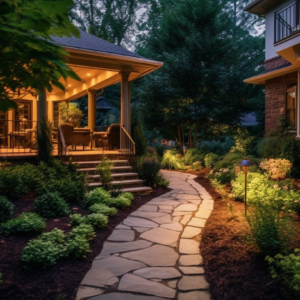
For example, you could use attractive river rock along your foundation and for a clean-looking pathway. At the same time, you can apply nutrient-rich shredded bark in your flower beds and around your trees. This hybrid method gives you the best of both worlds: soil improvement where you need it and durability where it counts.
Get Professional Mulch Installation Help
Choosing and applying mulch can be demanding. From calculating the right amount to ensuring it’s spread to the proper depth (typically 2-3 inches), getting it right is key to a healthy landscape. Applying too much mulch or piling it against tree trunks can lead to moisture problems and attract pests.
At Paradise Landscape and Hardscape, we take the guesswork out of mulching. Our expert team can help you select the ideal organic or inorganic mulch for every part of your property. We handle everything from delivery to professional mulch installation, guaranteeing a flawless finish that enhances your home’s curb appeal.
Don’t spend your weekend hauling heavy bags of mulch. Contact the pros at Paradise Landscape and Hardscape for our expert landscaping services and enjoy a beautiful, low-maintenance yard.
FAQ About Mulch
Do I need to remove old mulch before adding a new layer?
If you are using organic mulch, there is no need to remove the old layer. Simply apply a fresh layer on top. The old mulch will continue to decompose and enrich the soil. You should only remove old mulch if it has become matted and is preventing water from reaching the soil, or if you are switching from one type to another.
If you are using organic mulch, there is no need to remove the old layer. Simply apply a fresh layer on top. The old mulch will continue to decompose and enrich the soil. You should only remove old mulch if it has become matted and is preventing water from reaching the soil, or if you are switching from one type to another.
Can mulch attract pests?
Certain organic mulches can provide shelter for pests like slugs, snails, and insects. To minimize this, keep mulch 2-3 inches away from plant stems and your home’s foundation. Inorganic mulch, like stone, is far less likely to attract pests.
Certain organic mulches can provide shelter for pests like slugs, snails, and insects. To minimize this, keep mulch 2-3 inches away from plant stems and your home’s foundation. Inorganic mulch, like stone, is far less likely to attract pests.
How much does mulch cost?
Organic mulch generally costs between $20 and $110 per cubic yard, while inorganic mulch can range from $40 to over $400 per cubic yard. While inorganic mulch has a higher initial cost, its long-term durability often makes it more economical in the long run.
Organic mulch generally costs between $20 and $110 per cubic yard, while inorganic mulch can range from $40 to over $400 per cubic yard. While inorganic mulch has a higher initial cost, its long-term durability often makes it more economical in the long run.